[7 May 2012 | One Comment | ]
Creating Primary Keys in SQL Server

In SQL Server, the Referential Integrity is governed by the fact that there is a defined primary key that will only ever allow unique values. That primary key is used to establish relationships with other tables. This article shows you how to create primary keys in SQL Server. The concept of referential integrity requires two things, a unique value on the parent and a relationship to a child table through that unique value.

Read the full story »

Categories

Recent Content


[15 May 2012 | No Comment | ]

Stado provides a powerful and flexible analytical environment allowing users to process large amounts of data using a shared-nothing, massively parallel processing (MPP) architecture with PostgreSQL and PostGIS. Data is automatically partitioned across multiple nodes and each node processes its subset of data allowing queries to be distributed across the cluster and run in parallel.

[10 May 2012 | No Comment | ]

This video discusses Amazon DynamoDB, a NoSQL, highly scalable, SSD-based, zero administration database service in the AWS Cloud. It explains how DynamoDB works and also walk through some best practices and tips to get the most out of the service. With a few clicks in the AWS Management Console, customers can launch a new Amazon DynamoDB database table, scale up or down their request capacity for the table without downtime or performance degradation, and gain visibility into resource utilization and performance metrics.

[10 May 2012 | No Comment | ]

Have you ever wanted or perhaps needed to access data stored in a corporate Oracle database from within your Python environment? This session will help developers get up and running using Python with Oracle.

[8 May 2012 | No Comment | ]

This video describes how SQL locking and transactions operate in concept, and in practice (the two are not the same).

[7 May 2012 | No Comment | ]

Enterprises today collect and generate more data than ever before. Relational and data warehouse products excel at OLAP and OLTP workloads over structured data. The open-source project administered by the Apache Software Foundation known as Hadoop, is designed to solve a different problem: the fast, reliable analysis of both unstructured and complex data. As a result, many enterprises deploy Hadoop alongside their legacy IT systems, which allows them to combine old data and new data sets in powerful new ways.

[7 May 2012 | One Comment | ]

In SQL Server, the Referential Integrity is governed by the fact that there is a defined primary key that will only ever allow unique values. That primary key is used to establish relationships with other tables. This article shows you how to create primary keys in SQL Server. The concept of referential integrity requires two things, a unique value on the parent and a relationship to a child table through that unique value.

[4 May 2012 | No Comment | ]

What is new in the just released PostgreSQL 9.1? PostgreSQL core team member Josh Berkus gives you a whistle-stop tour of the top features of the new release, including live demos of several of them. Included: synchronous replication, new replication tools, unlogged tables, SSI, KNN-GiST, per-column collations and extensions.

[4 May 2012 | No Comment | ]

As MySQL powers business critical applications it is very important to be able to upgrade MySQL server with as low risk as possible. This presentation shows the best practices used by Percona to perform hundreds of MySQL upgrade projects as well as learn how to use Percona Toolkit to assist in simplifying those operations.

[2 May 2012 | No Comment | ]

The CouchDB document store is well suited to many CRUD style websites. However a particularly interesting aspect of Couch is the _changes feed which streams updates about what is going on inside the database. By using this feed with Node.js, Mikeal Rodgers shows how it’s possible to push data to the browser in ways previously not possible.

[2 May 2012 | No Comment | ]

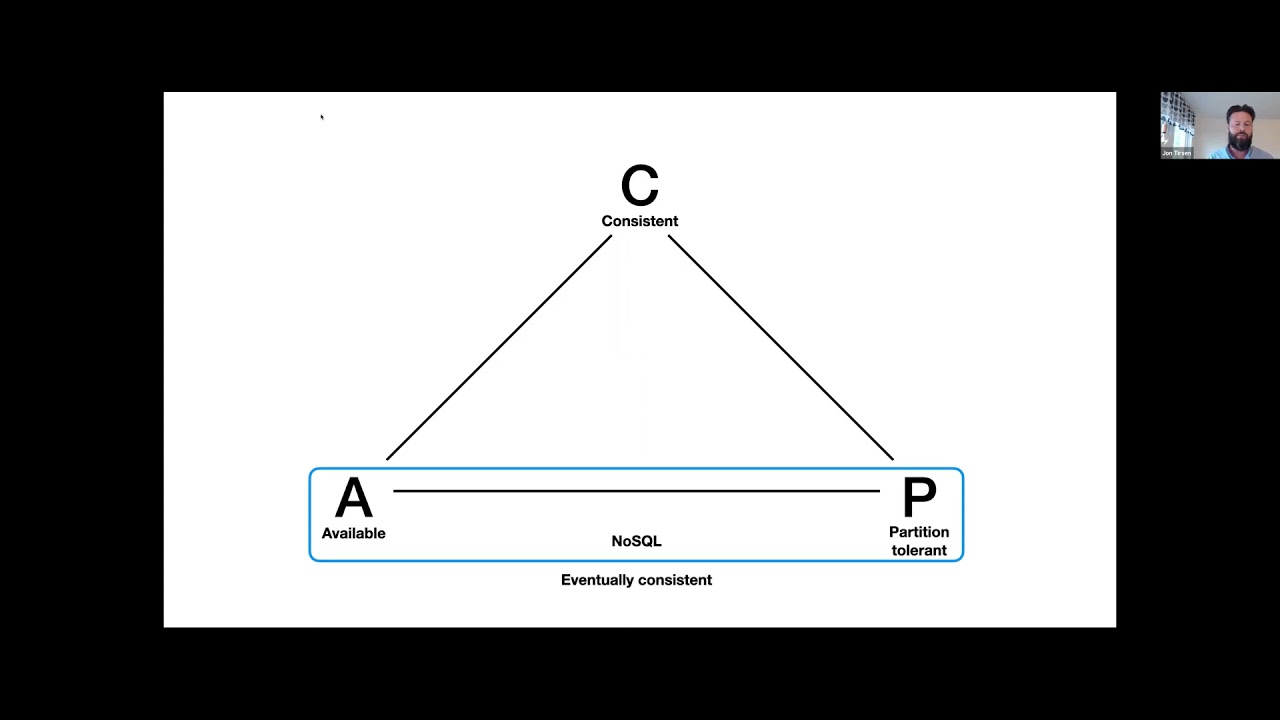
A presentation of the Redis Cluster, the new Redis component that provides linear scalability to Redis. Redis is an open source, advanced key-value store. It is often referred to as a data structure server since keys can contain strings, hashes, lists, sets and sorted sets. Unlike other distributed stores implementing eventual consistency the Redis Cluster design is tuned towards fully consistency, at the cost of fault tolerance in the case of netsplits. The design and tradeoffs of Redis cluster are explained, as well as its motivations.